Article written by-Hesselberg Alstrup
One option is tiny laceration lenticule excision (SMILE), which utilizes a laser to get rid of a lenticule, or slim slice, of your cornea. This procedure does not need a flap, as well as it can be utilized to treat both nearsightedness and hyperopia.
LASEK
If you're seeking a more secure and less intrusive procedure than LASIK, you may be thinking about utilizing LASEK (Laser Epithelial Keratomileusis). This is a reasonably new kind of vision improvement that integrates aspects of 2 well-known refractive surgical procedure procedures: PRK and LASIK.
During LASEK eye surgery, the cornea's surface layer is loosened with a watered down alcohol option as well as repositioned to shield it throughout the healing procedure. Then, a laser is used to improve the cornea.
The therapy can take a couple of days to heal, and also there's the possibility of irritability or minimized nighttime vision due to the repositioning of the surface layer. Nonetheless, these troubles typically only last a couple of days.
LASEK is also a good option for individuals with slim corneas, severe short-sightedness, and also pre-existing medical conditions. It likewise has a lower risk of dry eyes, which is a concern with LASIK as well as can cause a long term recuperation duration.
PRK
PRK is a different to LASIK, and it's perfect for individuals who have a thin cornea. It isn't as reliable at remedying refractive mistakes as LASIK, however it is safe and also can provide significant improvement in near vision.
The treatment is executed by using a laser to reshape your corneal cells. The physician numbs your eye with numbing decreases prior to surgery and carefully holds your eye open during the treatment.
Promptly after Learn Even more Here , your cosmetic surgeon will use a sponge which contains a medication called Mitomycin-C (MMC), which assists to heal your corneal tissue. Then a contact-lens-like plaster is placed over your eye to assist it recover and also help in your convenience.
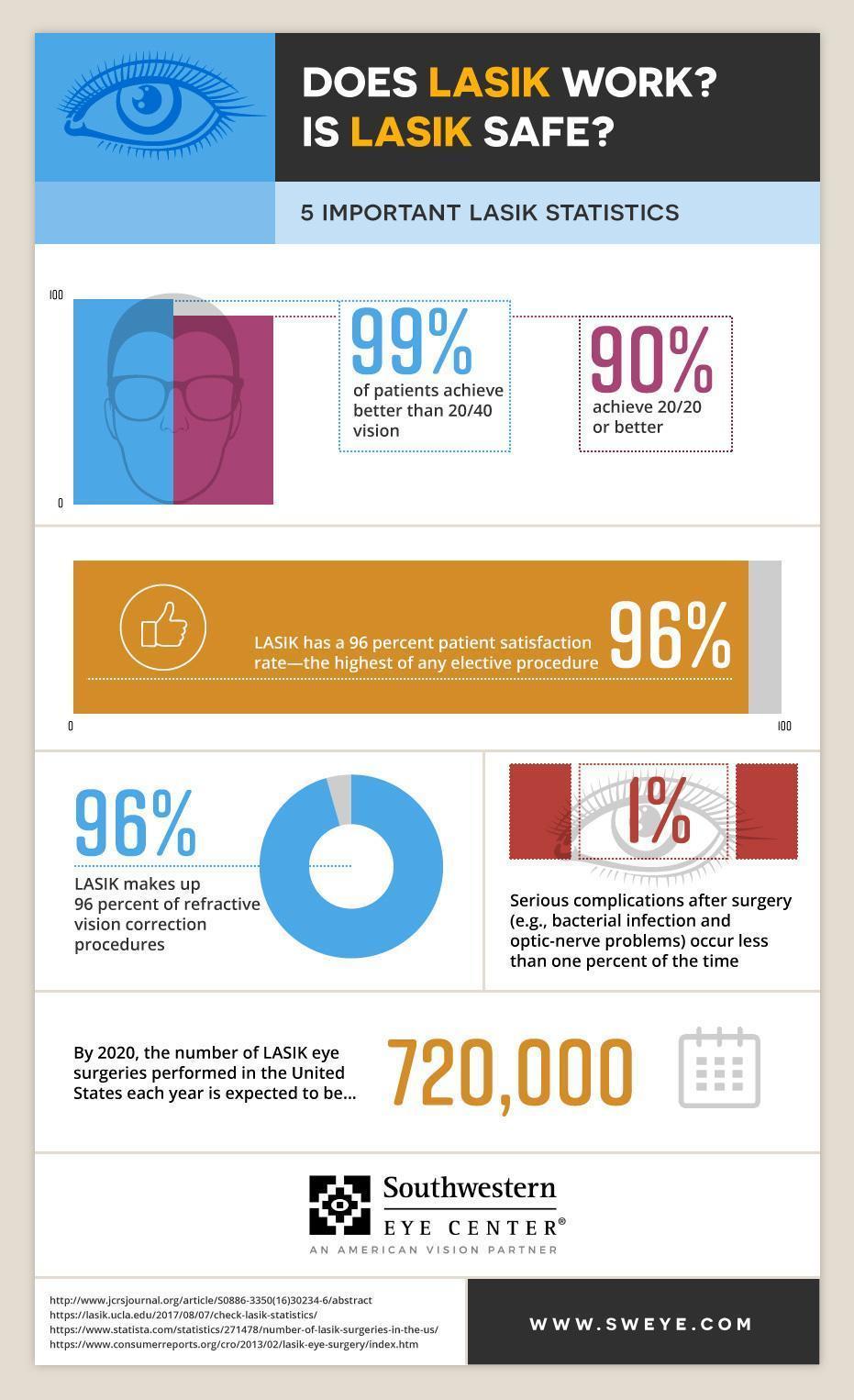
You'll need to use this bandage for a few days to allow the surface layer of your eye to restore. During https://telegra.ph/LASIK-Surgery-Can-Fix-Astigmatism-By-Improving-The-Cornea-The-Treatment-Fasts-And-Painless-04-14-2 , you might experience mild discomfort as well as inflammation. However, you must see renovation in your vision not long after the treatment. Lots of people have 20/20 or much better vision without glasses or get in touches with by one year after surgery.
Epi-LASIK
If you have slim corneas or would like a quicker recovery time than what is accomplished with LASIK, then Epi-LASIK may be the right option for you. In this procedure, the epithelium of the eye is gotten rid of with a great instrument prior to the excimer laser improves the cornea's surface area.
This procedure is especially advised for patients who wish to lower their dependancy on rehabilitative lenses. The results of this treatment can be rather great.
Some of the advantages of using this treatment consist of a much shorter healing duration and also much less pain than PRK. However, some individuals do experience longer-term discomfort as well as discomfort following Epi-LASIK.
In many cases, you might require to take discomfort medicine after your surgical procedure to eliminate any kind of pain that you really feel. This ought to be done after your physician recommends it. It's important to follow the guidelines your medical professional gives you for aftercare, as this will help you achieve optimal vision after Epi-LASIK.
Refractive Lens Exchange
Refractive Lens Exchange (RLE) is one more lasik choice for individuals with a lot more severe nearsightedness, farsightedness and also astigmatism. This procedure can likewise aid eliminate the risk of developing cataracts in the future.
The procedure entails surgically eliminating the natural lens and also replacing it with a synthetic intraocular lens (IOL). There are various sorts of man-made lenses offered, which will certainly be examined during your comprehensive appointment.
While RLE can supply long-term vision improvement, it is more costly than LASIK. It is typically not covered by insurance coverage.
If you are a great prospect for this surgery, you will be able to delight in improved vision after just a few days, though complete corrective advantages might not be understood for a number of weeks.
RLE can be a life-altering therapy, as it helps people avoid the demand for glasses or get in touch with lenses in the future. It is also much less intrusive than other vision-correcting surgical treatments as well as can protect against cataracts from forming in the future.